Exercise: Engaging in Presence — The Round Pen Practice
By Eva Jones
Many people use the round pen to “train” or “control” their horses. But the round pen can easily become a confined space for the horse, a place where pressure builds quickly and escape is limited. Before stepping inside, it’s important to recognize that your presence alone in that small space already carries weight and influence.
When you bring your horse into the round pen, enter it with the awareness that your energy will fill that space. The horse can feel that. This is why your state of being matters so much. The round pen is not a place to test control; it’s a place to deepen communication, and that requires calm engagement, not force.
1. Preparation
Before entering the round pen:
• Ground yourself. Take a moment to breathe and center your energy.
• Let go of distractions, thoughts, or expectations.
• Enter with the intention to listen and observe, not to “get something done.”
• Remember that the round pen is for advanced connection. Use it only after you’ve already built trust and mutual acceptance with your horse in a larger area.
2. Entering the Round Pen
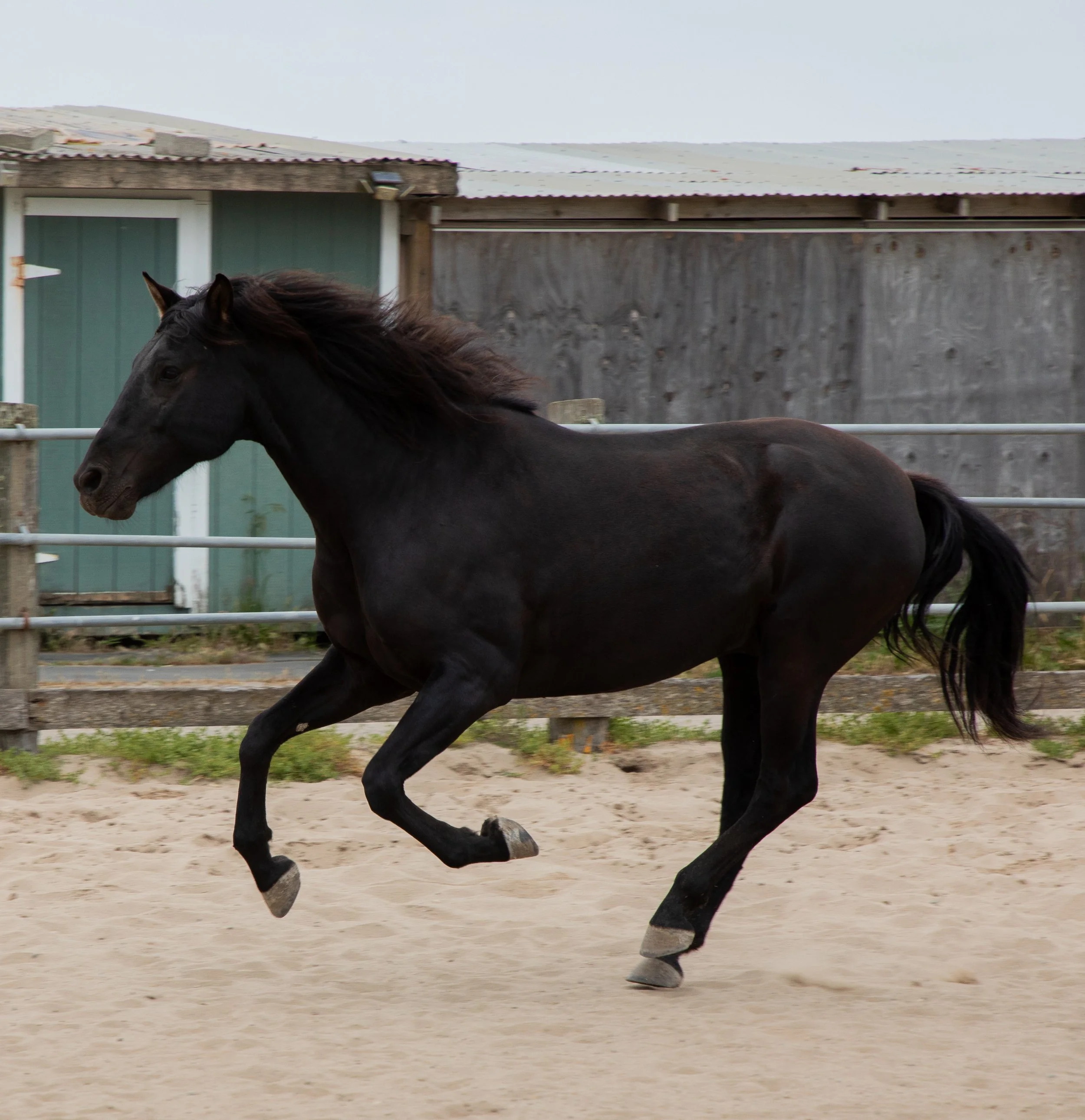
Once inside, be aware that even your quiet presence influences your horse. If your horse becomes reactive: running, kicking, or displaying dominance or fear, pause before reacting.
Most people, in this moment, add more aids: more pressure, more movement, more commands. But this often amplifies the horse’s anxiety or defensiveness. Instead, try something different:
• Observe what your horse is showing you.
• Acknowledge it as information, not defiance.
• Respond calmly and intentionally.
You might say softly (even if just in your mind), “Thank you for showing me that. I see you. But that’s not why we are here.”
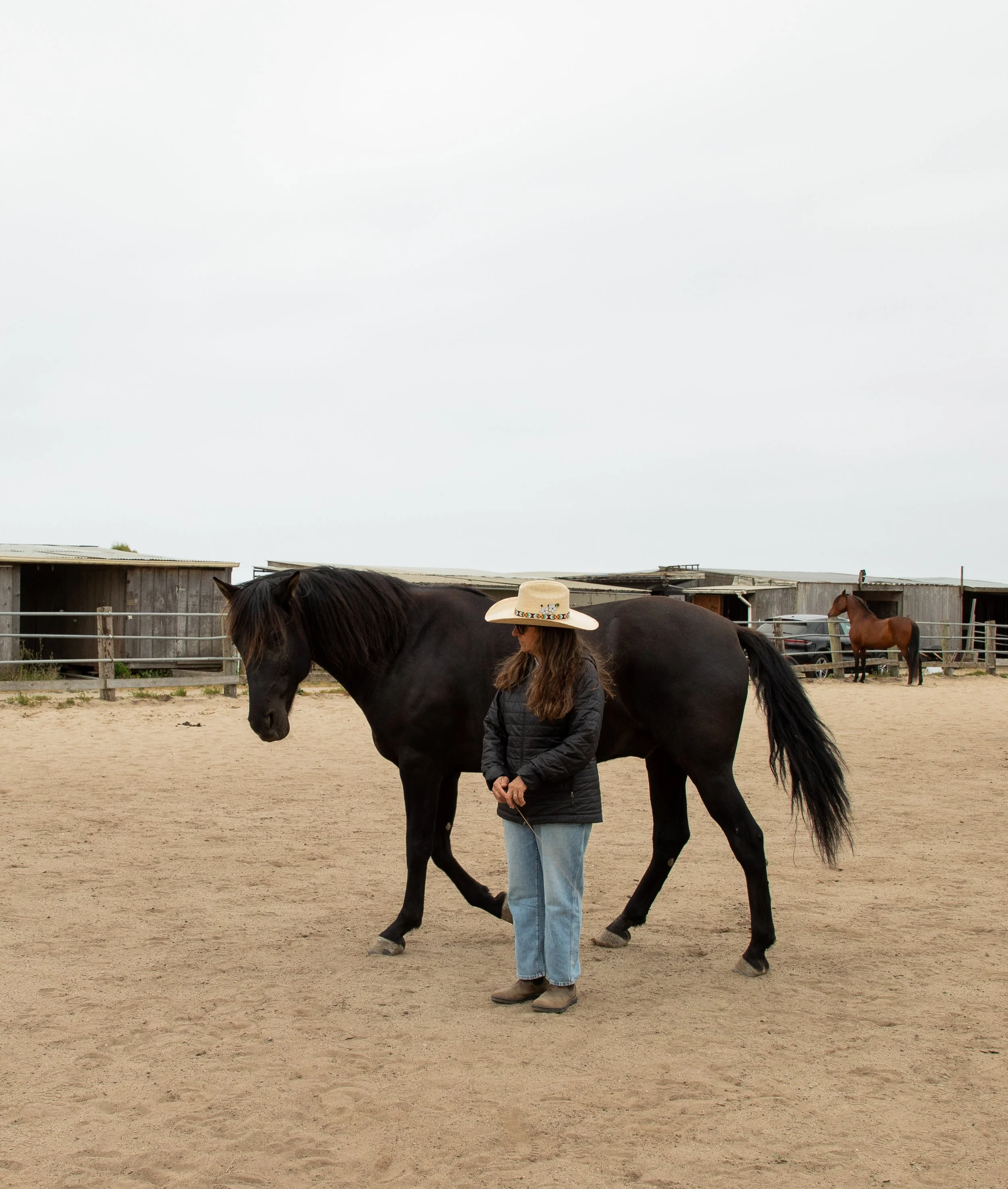
Then you can gently guide: “Would you mind walking instead of cantering?” and observe how your horse responds. This becomes a dialogue, not a demand.
3. When the Energy Escalates
If your horse continues to canter, kick, or cut through, stay calm. This is where most of us are tempted either to fight or flee: to push harder or to give up.
If you ever feel unsafe, step outside the round pen. But don’t abandon the moment. Take a chair and sit quietly outside the fence.
This is key: stay in connection even while you step away. Let the horse know, “I’m here. I’m not walking away from you, but I’m also not going to meet your chaos with more chaos.”
Sit, breathe, and hold space. Let your horse move as he needs to, run, release, express. Do nothing to correct it. Simply stay present and available.
4. Waiting for Connection
You will notice that, after a while, your horse begins to slow down. The movement softens. The energy changes. Eventually, he will come toward you, often stopping near the fence where you sit.
This moment is powerful. It’s not a surrender out of exhaustion or defeat, it’s a true willingness to connect. The horse chooses peace over flight. He comes to you because he feels your steadiness and trustworthiness.
When this happens, quietly enter the round pen again. Now there is no tension, no battle. The horse is with you, not because he has no other choice, but because he wants to be.
5. Reflection
Afterward, take a few minutes to reflect:
• What emotions came up for you when the horse was reactive?
• How did your own energy shift when you chose to sit and wait?
• What did you notice about the horse’s process of self-regulation?
• How did it feel when connection was restored?
This exercise is about transforming pressure and release into presence and release.
It’s about learning that engagement doesn’t come from control — it comes from the quiet power of being fully present and allowing space for the horse to find his own peace.