
What Happens When We Wait
By Calissa and Eva Jones
I decided a while ago that instead of giving into societal pressures and peoples opinions, I was going to do things with my horses slowly and always involving my intuiton. Today, that slowness paid off. I have been slowly preparing Valiente, my 5 year old Andalusian, to be ridden. I have learned time and time again that when I follow my instinct and truly follow what I have learned from my mentor and teacher, Carolyn Resnick, everything falls into place. She has taught me to do the work on the ground first: building connection, communicating, expressing, and listening. By doing this, I allow my horse to express everything he has to say, and I lean the important skill of listening. I’ve been working with Valiente through every phase of this journey because I he came to me when he was only six months old. Throughout our time together, I’ve listened and learned alongside him as he moved through his “teenage” stage and developmental process. At the same time, he was learning how to understand humans and the domesticated life he lives.By choosing not to rush him under saddle and focusing instead on groundwork and liberty, I believe he has been able to prepare, both physically and mentally, for the moment someone first gets on his back.
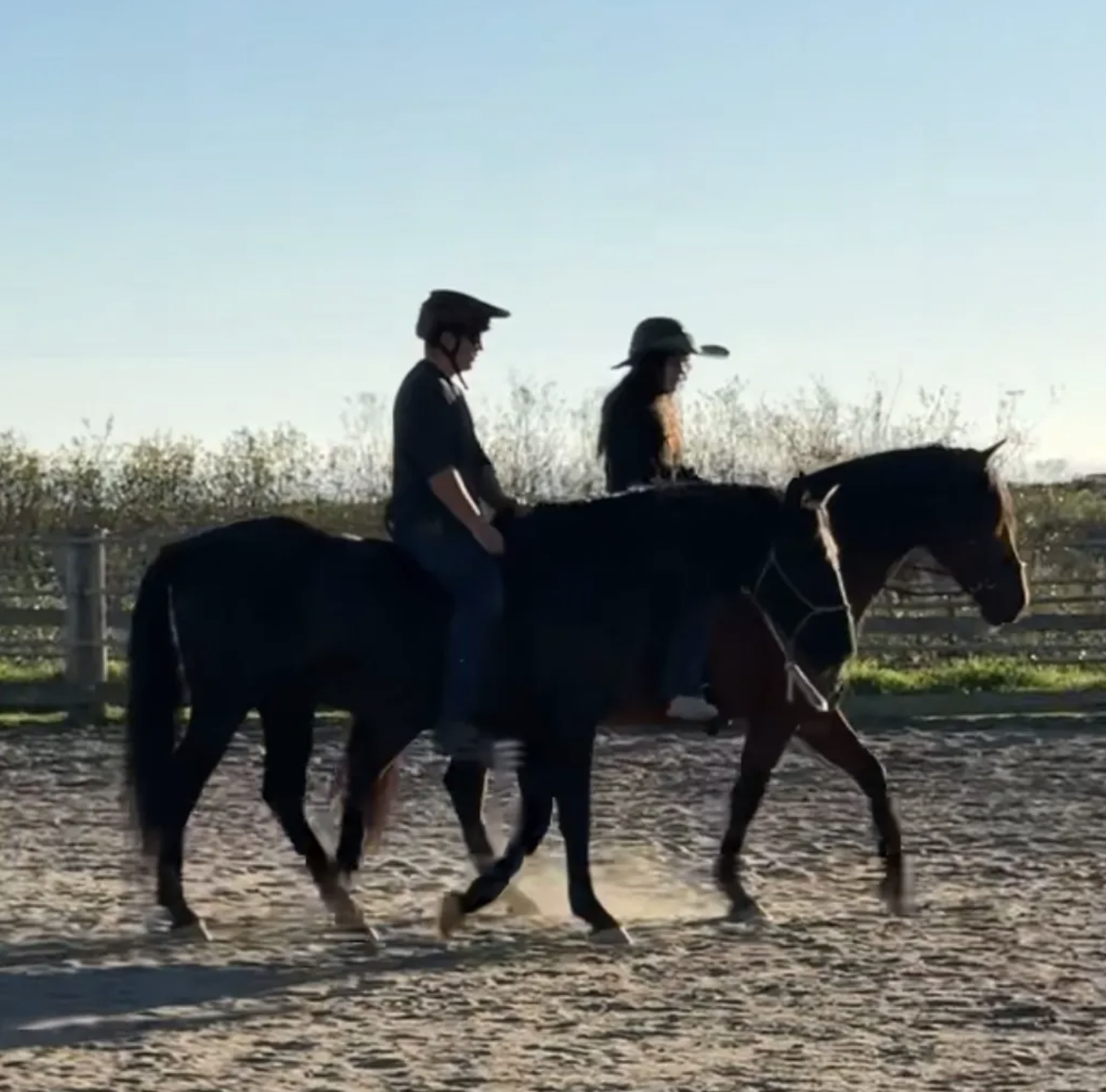
Because of all those conversations Valiente and I have had and the time I’ve taken, when the moment comes to ride, it feels completely natural and effortless. I don’t believe you have to break a horse, ever, I don’t believe there is any breaking at all. When I take my time, when I’m not in a rush with my horses, and when I surrender more deeply into the process, there is a clear understanding that this is simply the next step, nothing is taken from him to make riding possible. Riding is something Valiente and I have already talked about and prepared for together, long before anyone sits in the saddle. In this way, riding becomes an invitation.
This invitation Valiente has given to ride exists only because I stepped out of society’s fast pace and chose to take my time. I have worked with him at liberty since he was young, building communication without an agenda. I even tried earlier on to ride him, and he was very clear, no, and I had to respect that. I had to step out of the human idea that because money is being spent, or because a horse reaches a certain age, he needs to be ridden. ll of the outside voices saying, What are you doing? You’re losing time, had to be quieted so I could truly listen to my horse. At the same time, I had to listen to what I felt inside. This process has been a profound lesson in trusting my intuition, the knowing that tells me when the time is right and when it’s not. Only the person in relationship with the horse truly knows. And that relationship has to be developed.
Because of the path we’ve taken since I got him at six months old, we’ve had no issues. This is something I think about often with young horses. There is so much outside criticism and pressure to rush their maturity. Many people start horses at three years old and say their joints are developed and they’re ready, but often they’re not. I believe that in most cases we start them too early, and when that happens, the only thing we meet is resistance. I know so many horses who develop muscle and soundness issues by six or seven years old because they were started at three, before they were truly ready. These horses are incredibly intelligent, they are ready to work, they are ready to express themselves on the ground and tell me everything about who they are. I just have to wait, listen, and let them show me when they are truly ready to be ridden.
And when I do wait, I am rewarded. From that point on, riding is clear. There is no more mystery because nothing is being pushed or taken. It becomes easy, honest, and true, a continuation of the relationship rather than a demand placed on it.
